


Maine Medicare Choices an
Independent Medicare Agency
Independent Medicare agents in Bangor Maine
"We make Maine Medicare Plans Easy."
Maine
Medicare
Choices


Sample Cancellation letter

2027
2027
2026
2026
2027
Important: Save this letter. Do not throw it away.

Medicare Advantage plans in Central Maine

Maine Medicare Plan choices....Medicare advantage or Medigap?
Then we will help youenroll in a plan for 2027 Free consultation Please watch this video 1st
Since 2020 most plans have been $0
Most plans offered Dental Vision and Hearing.
Some plans offered food cards.
I have always offered Medicare Advantage plans because we all saw the value. If I am going to pay $33, $40, $50 or $100 with Increased co pays...I would rather do a Medigap plan.
Please watch Video. Then make an appointment to discuss options. Options are pay for an over priced Medicare advantage plan or use this as an opportunity to get Great coverage for a few dollars more.YOU PAY ORIGINAL MEDICARE AMOUNTS UNTIL YOU REACH YOUR DEDUCTIBLE. AFTER DEDUCTIBLE YOU PAY NOTHING!!!
BOOK A FREE CONSULTATION AND DISCOVER ALL YOU PLAN CHOICES (WHICH ARE A LOT LESS THAN LAST YEAR)




All Meetings are reserved for 30 minutes, in case you have more questions.


30 Minutes
book 2 if
needed =>


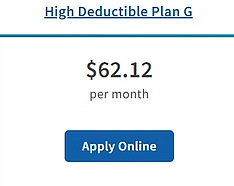
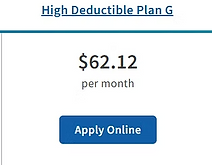
These are two different Prices for Two different companies for Plan G high Deductible


How to pick a Part D plan
How to find your part D Prescription plan VIDEO
Service Area Reduction
SAR= NO MEDICAL QUESTIONS
HIGH DEDUCTIBLE PLAN G-
-You pay the first $283 for the part B Deductible.
-YOU only PAY 20% OF MEDICAL BILLS TILL YOU REACH $2950
Medicare still pays its normal share before you meet the high deductible. You accumulate eligible expenses left to you after Medicare pays—not the provider’s entire bill. For example, after the Part B deductible, Original Medicare generally pays 80% of the approved amount for a covered physician service, leaving 20% coinsurance. Original Medicare cost sharing
Operations and MRI's would fall under part B.
Part A works differently. Hospital stays don't use the 20% split. Medicare charges set amounts instead, and the client pays those until they reach the $2,950.
Part A amounts for 2026:
Part A costOriginal Medicare chargesCounts toward $2,950?
Hospital deductible (once per benefit period) $1,736 Yes
Hospital days 61–90 $434/day Yes
Lifetime reserve days 91–150 $868/day Yes
Skilled nursing days 21–100 $217/day Yes
Hospital days 1–60 $0 after the deductiblen/a
Hospice$0 (small drug copays)n/a
Medicare in Maine has been a Roller coaster ride over the last 2 years, and who knows what 2027 is going to bring. In 2026 at least Three plans in our areas had price increases, there was Service area Reductions and most plans are reducing extra benefits.
So USE THIS AS your opportunity to enroll in a Medigap plan under guaranteed issue!!!!
2027 Medicare advantage plan prices $45 or $50 $109
My formal recommendation is to use this as an opportunity to get a Medigap plan.
-
If you get a SAR (service area reduction you have guaranteed issue rights)
-
You can do a High deductible plan G for $62 or a Plan N for $204 per month. See below and schedule a time to make the switch in October, November or December.
-
If you are paying for your Medicare plan set up an appointment you may be able to get a Medigap plan and get off of the Medicare advantage merry-go-round.


-
MRI: Generally Part B when it’s a medically necessary diagnostic MRI. Medicare specifically lists MRIs as diagnostic non-laboratory tests covered under Part B. MMedicare+1
-
Outpatient surgery: Part B covers approved outpatient surgeries and related services. This includes surgeries performed in a hospital outpatient department or an ambulatory surgical center. MMedicare+1
-
Inpatient surgery: If you're formally admitted to the hospital as an inpatient, the hospital portion of the surgery/stay is generally Part A. Part B generally covers the physicians' services during the inpatient stay. MMedicare+1
Simple way to remember it
Service Usually Medicare MRI as an outpatient Part B Outpatient surgeryPart B
Surgery during an inpatient hospital stay Part A for hospital services + Part B for doctor services
One important point: staying overnight does not automatically make you an inpatient. You are generally considered an inpatient only when a doctor formally admits you.
What the $2,950 deductible changes
Separate Plan G benefits and out-of-pocket costs from the premium quoted to you. Regular Plan G covers specified gaps such as the Part A deductible, Part B coinsurance, skilled nursing facility coinsurance and Part B excess charges. The high-deductible version provides those benefits after its annual deductible is met. Neither version covers the Part B deductible. Medicare’s benefit comparison
Medicare still pays its normal share before you meet the high deductible. You accumulate eligible expenses left to you after Medicare pays—not the provider’s entire bill. For example, after the Part B deductible, Original Medicare generally pays 80% of the approved amount for a covered physician service, leaving 20% coinsurance. Original Medicare cost sharing
The Part B deductible is $283 in 2026. Your payments toward it count toward the $2,950 high deductible, even though Plan G does not reimburse them. If you reach the high deductible through other eligible expenses first, any unmet Part B deductible remains your responsibility. The high deductible applies each calendar year. 2026 Part B costs, standardized benefit rules
The $2,950 is not a ceiling on all health spending. Premiums are excluded, and Medigap generally does not cover routine dental or vision care, hearing aids or long-term custodial care. Plan G’s foreign-travel emergency benefit has separate cost sharing and limits, including a $250 deductible that does not count toward the high deductible. CMS deductible rules, Medigap exclusions, foreign-travel deductible rule